果儿影视 果儿影视

确认

购买本片需要支付0金币,确定要购买吗?

取消

确定

影视简介
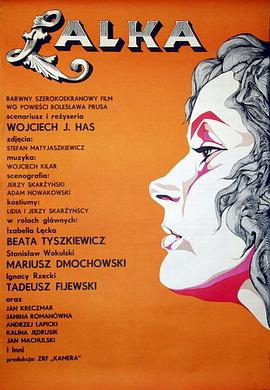
The Doll is an adaptation of the novel, The Doll (novel) by Bolesław Prus, which is regarded by many as one of the finest Polish novels ever written and, along with Pharaoh (novel), made Bolesław Prus a potential candidate for the Nobel Prize in literature. The influence of Émile Zola is evident, and some have compared the novel to Madame Bovary by Gustave Flaubert; both were Prus's contemporaries. The movie, however, may be more compared to Stendhal's Le Rouge et le Noir, (The Red and the Black).  The Doll constitutes a panorama of life in Warsaw between 1878 and 1879, and at the same time is a subtle story of three generations of Polish idealists, their psychological complications, their involvement in the history of the nineteenth century, social dramas, moral problems and the experience of tragic existence. At the same time this story describes the disintegration of social relationships and the growing separation of a society whose aristocratic elite spreads the models of vanity and idleness. In the bad air of a backward country, anti-Semitic ideas are born, valuable individuals meet obstacles on their way, and scoundrels are successful.  This poetic love story follows a nouveau riche merchant, Stanislaw Wokulski, through a series of trials and tribulations occasioned by his obsessive passion for an aristocratic beauty, Izabela Lecka, played by the famous Polish actress, Beata Tyszkiewicz.  Plot  As a descendant of an impoverished Polish noble family, young Wokulski is forced to work as a waiter at Hopfer's, a Warsaw restaurant, while dreaming of a life in science. After taking part in the failed 1863 Uprising against Tsarist Russia, he is sentenced to exile in Siberia. On eventual return to Warsaw, he becomes a salesman at Mincel's haberdashery. Marrying the late owner's widow (who eventually dies), he comes into money and uses it to set up a partnership with a Russian merchant he had met while in exile. The two merchants go to Bulgaria during the Russo-Turkish War of 1877-78, and Wokulski makes a fortune supplying the Russian Army. The enterprising Wokulski now proves a romantic at heart, falling in love with Izabela, daughter of the vacuous, bankrupt aristocrat, Tomasz Łęcki. In his quest to win Izabela, Wokulski begins frequenting theatres and aristocratic salons; and to help her financially distressed father, founds a company and sets the aristocrats up as shareholders in his business.The indolence of these aristocrats, who secure with their pensions, are too lazy to undertake new business risks, frustrates Wokulski. His ability to make money is respected but his lack of family and social rank is condescended to. Because of his help (in secret) to Izabela's impecunious but influential father, the girl becomes aware of his affection. In the end she consents to accept him, but without true devotion or love.(wikipedia)
演员

玩偶1968

资源列表
  • HD中字
相关影视
更多
挺好的
刘涛失手伤人服刑八年,出狱后和家人关系疏远。经介绍他照顾瘫痪老人,后来得知对方竟是自己父亲。姐姐因心里有怨隐瞒真相,父亲却一直体谅他。死者母亲何姨选择原谅刘涛,他承担死者孩子学费,一边配音一边尽心孝敬父亲。
燃烧吧!爸爸
顾立言(文淇 饰)与妈妈吴开蒂(倪虹洁 饰)面临至亲离别,追忆欢愉往昔,亦要面对遭逢变故后的各自成长。   即将大学毕业的顾立言(文淇 饰)与精明伶俐的母亲吴开蒂(倪虹洁 饰)关系微妙,随着父亲顾卫星(喻恩泰 饰)的久病离世,二人一边应对繁琐未知的丧葬流程,一边发现父亲的另外一面人生。这对性格迥异的母女在各类啼笑皆非又荒诞抓马的事件中彼此了解,在爱中各自奔赴新生。
疾速保镖
私人安保员郭远超因任务意外与好友开餐厅,为筹钱救好友女儿,接受护送商人鲁道夫的任务,途中遇袭后曹心怡失踪、落入军阀之手。郭远超发现鲁道夫与政府军交易生化武器“血珀”,于是夺走血珀,设计在工厂交换人质,引发三方混战,最终炸毁工厂,化解危机
敦煌英雄
大唐敦煌重镇漠州,安史之乱后沦陷守军尽殉。六十年来丝路断绝,百姓饱受匪首任光热奴役。狮子吼,唐军归 的传说,是众人仅存的念想。张佑承举义归义之火燃起,却敌众势危。狼鹞子一行小队出城求援。黄沙埋忠骨,众人拼死一搏,盼唐旗重扬漠州城头
阿里·G:我系水?
躺平二十年的街头老炮阿里·G,突然得知交往多年的女友已经怀孕八个月。为了赚奶粉钱、重拾当年的街头辉煌,他结束摆烂生涯动身前往美国,打算靠自己的嘻哈人设大赚一笔钞票。只是美国的现实远超出他的预想,一路上乌龙百出笑料不断,原本的搞钱大计彻底跑偏成了一场荒诞离谱的爆笑冒险。
人气88 剧情片
9.2 2023 其它 HD
剧情片

年份: 2023

主演: Aleksander Fogiel   Andrzej H   Anna Seniuk   Halina Kwiatkowska   Irena Szramowska   Jadwiga Gall   Jan Koecher   Janina Romanówna   Józef Pieracki   Wladyslaw Dewoyno   克雷斯蒂娜.费尔德曼   卡里娜·谢鲁斯克   卢德维克·伯努瓦   塔德乌什·孔德拉特   安杰伊·瓦皮茨基   扬·克雷奇马尔   扬·马休斯基   维斯拉夫·格拉斯   菲耶夫斯基·塔德乌什   贝娅塔·蒂希基维茨   马里乌什·德莫霍夫斯基  

描述:The Doll is an adaptation of the novel, The Doll (novel) by Bolesław Prus, which is regarded by many as one of the finest Polish novels ever written and, along with Pharaoh (novel), made Bolesław Prus a potential candidate for the Nobel Prize in literature. The influence of Émile Zola is evident, and some have compared the novel to Madame Bovary by Gustave Flaubert; both were Prus's contemporaries. The movie, however, may be more compared to Stendhal's Le Rouge et le Noir, (The Red and the Black).  The Doll constitutes a panorama of life in Warsaw between 1878 and 1879, and at the same time is a subtle story of three generations of Polish idealists, their psychological complications, their involvement in the history of the nineteenth century, social dramas, moral problems and the experience of tragic existence. At the same time this story describes the disintegration of social relationships and the growing separation of a society whose aristocratic elite spreads the models of vanity and idleness. In the bad air of a backward country, anti-Semitic ideas are born, valuable individuals meet obstacles on their way, and scoundrels are successful.  This poetic love story follows a nouveau riche merchant, Stanislaw Wokulski, through a series of trials and tribulations occasioned by his obsessive passion for an aristocratic beauty, Izabela Lecka, played by the famous Polish actress, Beata Tyszkiewicz.  Plot  As a descendant of an impoverished Polish noble family, young Wokulski is forced to work as a waiter at Hopfer's, a Warsaw restaurant, while dreaming of a life in science. After taking part in the failed 1863 Uprising against Tsarist Russia, he is sentenced to exile in Siberia. On eventual return to Warsaw, he becomes a salesman at Mincel's haberdashery. Marrying the late owner's widow (who eventually dies), he comes into money and uses it to set up a partnership with a Russian merchant he had met while in exile. The two merchants go to Bulgaria during the Russo-Turkish War of 1877-78, and Wokulski makes a fortune supplying the Russian Army. The enterprising Wokulski now proves a romantic at heart, falling in love with Izabela, daughter of the vacuous, bankrupt aristocrat, Tomasz Łęcki. In his quest to win Izabela, Wokulski begins frequenting theatres and aristocratic salons; and to help her financially distressed father, founds a company and sets the aristocrats up as shareholders in his business.The indolence of these aristocrats, who secure with their pensions, are too lazy to undertake new business risks, frustrates Wokulski. His ability to make money is respected but his lack of family and social rank is condescended to. Because of his help (in secret) to Izabela's impecunious but influential father, the girl becomes aware of his affection. In the end she consents to accept him, but without true devotion or love.(wikipedia)
展开

资源列表

友情链接模块

本地记录
*
*