果儿影视 果儿影视

确认

购买本片需要支付0金币,确定要购买吗?

取消

确定

影视简介
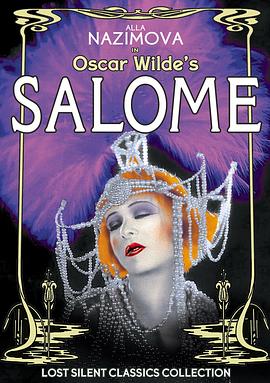
Salomé (1923), a silent film directed by Charles Bryant and starring Alla Nazimova, is a film adaptation of the Oscar Wilde play of the same name. The play itself is a loose retelling of the biblical story of King Herod and his execution of John the Baptist (here, as in Wilde's play, called Jokaanan) at the request of his stepdaughter, Salomé, whom he lusts after.  Salomé is often called one of the first art films to be made in the U.S.[citation needed] The highly stylized costumes, exaggerated acting (even for the period), minimal sets, and absence of all but the most necessary props make for a screen image much more focused on atmosphere and on conveying a sense of the characters' individual heightened desires than on conventional plot development.  Despite the film being only a little over an hour in length and having no real action to speak of, it cost over $350,000 to make. All the sets were constructed indoors to be able to have complete control over the lighting. The film was shot completely in black and white, matching the illustrations done by Aubrey Beardsley in the printed edition of Wilde's play. The costumes, designed by Natacha Rambova, used material only from Maison Lewis of Paris, such as the real silver lamé loincloths worn by the guards.  No major studio would be associated with the film, and it was years after its completion before it was released, by a minor independent distributor. It was a complete failure at the time and marked the end of Nazimova's producing career.  A longstanding rumor, which seems to have started while the film was still in production, suggests that its cast is comprised entirely of gay and bisexual actors in an homage to Oscar Wilde, as per star and producer Nazimova's demand. It is, of course, impossible to say, but one of the extras in Salomé reported that a number of the cast members—both featured and extras—were indeed gay, but not an unusual percentage of them, and certainly not all of them. What can be said is that Nazimova herself was a lesbian, the two guard characters (who, next to Salomé, have the most screen time) are at least played very stereotypically gay, and several of the female courtiers are men in drag.  Salomé was screened in 1989 at the New York International Festival of Lesbian and Gay films and in 1990 at the New York Gay Experimental Film Festival.  In 2000, the United States Library of Congress deemed the film culturally significant and selected it for preservation in the National Film Registry.
演员

萨乐美

资源列表
  • HD中字
相关影视
更多
亨尼西凶宅谋杀案
一档热门捉鬼电视节目组前往臭名昭著的亨尼西宅邸探秘,原本只为录制节目,却意外遭遇难以名状的恐怖,令人不寒而栗。
异类
随着某种邪恶势力浮出水面,混乱逐渐蔓延到了这个宁静的山区湖泊小镇。
未归
《未归》是腾讯视频纪录片“AI灵境季”项目之一,是以流失海外的中国文物为主角,融合AI影像技术、历史文化与东方奇幻美学的系列纪录短剧。故事以年轻女孩林晚和朵朵的海外博物馆之旅为线索。当沉睡千年的文物突然苏醒,一场跨越时空的奇妙旅程就此展开。从商周青铜礼器到千年佛像,从精美绝伦的宫廷珍宝到承载文人风骨的书画典籍,每一件文物都有自己的性格、记忆与故事。它们或幽默风趣,或庄严深沉,带领观众穿越千年,重返华夏文明的璀璨岁月,见证古人的智慧、匠心与悲欢,也讲述那些辗转异乡、漂泊未归的漫长往事。作品以轻松幽默的对话打
心跳声
讲述一个极其简单却直击心灵的故事:一个8岁的男孩(金建宇 饰)在上课期间,因为极度担心患有严重抑郁症的妈妈(全度妍 饰)独自在家会自杀,找借口离开教室,一路遭遇重重难关、急忙奔跑回家的过程。
vip专享
女传说之魔性的悦
在乡下港边经营理发店的石川健次,最近跟年轻女子结婚,石川健次的妻子沉默寡言,拥有美艳气质以及神秘的双瞳,他们一起经营理发店。石川健次的妻子十分怪异,理发完后,都会发生离奇现象,并且色诱男人,主动和男客激情作爱,事后男客都是暴毙身亡。她吸取男人的精气,以保持自己成为青春艳丽女人,男人在悦乐的另一边温柔的死。可悲的好色男人们,接连在其理发店内,风流淫乐后死亡。丈夫石川健次,知道和他妻子性交后的男人必死,有一天,他忍不住决定和妻子作爱,同样遭此恶运。
恶灵缪斯
一名郁郁不得志的小说家与恶灵立下契约,对方许诺助他一举成名。
人气57 剧情片
8.8 2023 美国 HD
剧情片

年份: 2023

主演: 艾拉·娜兹莫娃  

描述:Salomé (1923), a silent film directed by Charles Bryant and starring Alla Nazimova, is a film adaptation of the Oscar Wilde play of the same name. The play itself is a loose retelling of the biblical story of King Herod and his execution of John the Baptist (here, as in Wilde's play, called Jokaanan) at the request of his stepdaughter, Salomé, whom he lusts after.  Salomé is often called one of the first art films to be made in the U.S.[citation needed] The highly stylized costumes, exaggerated acting (even for the period), minimal sets, and absence of all but the most necessary props make for a screen image much more focused on atmosphere and on conveying a sense of the characters' individual heightened desires than on conventional plot development.  Despite the film being only a little over an hour in length and having no real action to speak of, it cost over $350,000 to make. All the sets were constructed indoors to be able to have complete control over the lighting. The film was shot completely in black and white, matching the illustrations done by Aubrey Beardsley in the printed edition of Wilde's play. The costumes, designed by Natacha Rambova, used material only from Maison Lewis of Paris, such as the real silver lamé loincloths worn by the guards.  No major studio would be associated with the film, and it was years after its completion before it was released, by a minor independent distributor. It was a complete failure at the time and marked the end of Nazimova's producing career.  A longstanding rumor, which seems to have started while the film was still in production, suggests that its cast is comprised entirely of gay and bisexual actors in an homage to Oscar Wilde, as per star and producer Nazimova's demand. It is, of course, impossible to say, but one of the extras in Salomé reported that a number of the cast members—both featured and extras—were indeed gay, but not an unusual percentage of them, and certainly not all of them. What can be said is that Nazimova herself was a lesbian, the two guard characters (who, next to Salomé, have the most screen time) are at least played very stereotypically gay, and several of the female courtiers are men in drag.  Salomé was screened in 1989 at the New York International Festival of Lesbian and Gay films and in 1990 at the New York Gay Experimental Film Festival.  In 2000, the United States Library of Congress deemed the film culturally significant and selected it for preservation in the National Film Registry.
展开

资源列表

友情链接模块

本地记录
*
*