果儿影视 果儿影视

确认

购买本片需要支付0金币,确定要购买吗?

取消

确定

影视简介
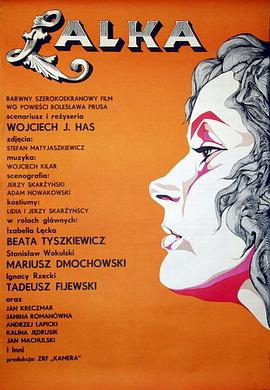
The Doll is an adaptation of the novel, The Doll (novel) by Bolesław Prus, which is regarded by many as one of the finest Polish novels ever written and, along with Pharaoh (novel), made Bolesław Prus a potential candidate for the Nobel Prize in literature. The influence of Émile Zola is evident, and some have compared the novel to Madame Bovary by Gustave Flaubert; both were Prus's contemporaries. The movie, however, may be more compared to Stendhal's Le Rouge et le Noir, (The Red and the Black).  The Doll constitutes a panorama of life in Warsaw between 1878 and 1879, and at the same time is a subtle story of three generations of Polish idealists, their psychological complications, their involvement in the history of the nineteenth century, social dramas, moral problems and the experience of tragic existence. At the same time this story describes the disintegration of social relationships and the growing separation of a society whose aristocratic elite spreads the models of vanity and idleness. In the bad air of a backward country, anti-Semitic ideas are born, valuable individuals meet obstacles on their way, and scoundrels are successful.  This poetic love story follows a nouveau riche merchant, Stanislaw Wokulski, through a series of trials and tribulations occasioned by his obsessive passion for an aristocratic beauty, Izabela Lecka, played by the famous Polish actress, Beata Tyszkiewicz.  Plot  As a descendant of an impoverished Polish noble family, young Wokulski is forced to work as a waiter at Hopfer's, a Warsaw restaurant, while dreaming of a life in science. After taking part in the failed 1863 Uprising against Tsarist Russia, he is sentenced to exile in Siberia. On eventual return to Warsaw, he becomes a salesman at Mincel's haberdashery. Marrying the late owner's widow (who eventually dies), he comes into money and uses it to set up a partnership with a Russian merchant he had met while in exile. The two merchants go to Bulgaria during the Russo-Turkish War of 1877-78, and Wokulski makes a fortune supplying the Russian Army. The enterprising Wokulski now proves a romantic at heart, falling in love with Izabela, daughter of the vacuous, bankrupt aristocrat, Tomasz Łęcki. In his quest to win Izabela, Wokulski begins frequenting theatres and aristocratic salons; and to help her financially distressed father, founds a company and sets the aristocrats up as shareholders in his business.The indolence of these aristocrats, who secure with their pensions, are too lazy to undertake new business risks, frustrates Wokulski. His ability to make money is respected but his lack of family and social rank is condescended to. Because of his help (in secret) to Izabela's impecunious but influential father, the girl becomes aware of his affection. In the end she consents to accept him, but without true devotion or love.(wikipedia)
演员

玩偶1968

资源列表
  • HD中字
相关影视
更多
挺好的
刘涛失手伤人服刑八年,出狱后和家人关系疏远。经介绍他照顾瘫痪老人,后来得知对方竟是自己父亲。姐姐因心里有怨隐瞒真相,父亲却一直体谅他。死者母亲何姨选择原谅刘涛,他承担死者孩子学费,一边配音一边尽心孝敬父亲。
禁闭洗手间
1986年的马德拉斯,一个胆小的八岁男孩不小心把一个令人闻风丧胆的罪犯锁在了学校的厕所里。当这个男人面临饥饿和孤立时,一段意想不到的友谊在他们之间悄然萌生,彻底改变了彼此的命运。
不离不弃2026
里斯蒂亚娜是个单身母亲,丈夫离开后,她独自抚养着三个孩子——塔玛、德维和特里亚。尽管生活艰苦,但她依然努力把孩子们养大。然而,她却面临着丈夫留下巨额债务的问题。塔玛、德维和特里亚对母亲的这个决定感到十分困扰,他们也处于两难境地之中。曾经亲密无间、和睦相处的一家人,如今却不得不面对彼此间的隔阂,这让里斯蒂亚娜充满渴望。塔玛、德维和特里亚始终没有放弃对母亲的关爱,他们能否在为时已晚之前改变现状呢?
柳条人
海边小镇里有一个身上散发臭味的打渔女(奥利维娅·科尔曼 Olivia Colman 饰),饱受狭隘的邻居嘲讽,而她为自己找了个柳条做成的丈夫。这段离经叛道的爱情在保守的小镇里引起了怒火、嫉妒和轩然大波。
突如其来
玛丽-露·方丹(维尔日妮·埃菲拉 饰)是巴黎郊区一家养老院的院长,她不顾阻力,强推名为“人性照护法”的人道主义护理方法。直至遇到癌症晚期的日本剧作家森崎真理(冈本多绪 饰)。两位女性因共同的价值观,以及彼此对对方语言的深切眷恋而走到一起,展开了一段深厚的友谊,这段关系不仅改变了她们对生命的看法,也悄然改变了整个养老机构。
纽约最后的扒手
哈利是个典型的纽约本地人,老派的街头混客,自上世纪80年代起就靠扒窃来的现金疏通关节、谋取生计。他手法老道,技艺不断精进,但时代正在抛弃哈利。现在是2025年,街头每日的“收获”是什么?是花里胡哨可追踪的智能手机。是塞满信用卡的无现金钱包。是装着加密货币和枪支的健身包。
人气86 剧情片
9.2 2023 其它 HD
剧情片

年份: 2023

主演: Aleksander Fogiel   Andrzej H   Anna Seniuk   Halina Kwiatkowska   Irena Szramowska   Jadwiga Gall   Jan Koecher   Janina Romanówna   Józef Pieracki   Wladyslaw Dewoyno   克雷斯蒂娜.费尔德曼   卡里娜·谢鲁斯克   卢德维克·伯努瓦   塔德乌什·孔德拉特   安杰伊·瓦皮茨基   扬·克雷奇马尔   扬·马休斯基   维斯拉夫·格拉斯   菲耶夫斯基·塔德乌什   贝娅塔·蒂希基维茨   马里乌什·德莫霍夫斯基  

描述:The Doll is an adaptation of the novel, The Doll (novel) by Bolesław Prus, which is regarded by many as one of the finest Polish novels ever written and, along with Pharaoh (novel), made Bolesław Prus a potential candidate for the Nobel Prize in literature. The influence of Émile Zola is evident, and some have compared the novel to Madame Bovary by Gustave Flaubert; both were Prus's contemporaries. The movie, however, may be more compared to Stendhal's Le Rouge et le Noir, (The Red and the Black).  The Doll constitutes a panorama of life in Warsaw between 1878 and 1879, and at the same time is a subtle story of three generations of Polish idealists, their psychological complications, their involvement in the history of the nineteenth century, social dramas, moral problems and the experience of tragic existence. At the same time this story describes the disintegration of social relationships and the growing separation of a society whose aristocratic elite spreads the models of vanity and idleness. In the bad air of a backward country, anti-Semitic ideas are born, valuable individuals meet obstacles on their way, and scoundrels are successful.  This poetic love story follows a nouveau riche merchant, Stanislaw Wokulski, through a series of trials and tribulations occasioned by his obsessive passion for an aristocratic beauty, Izabela Lecka, played by the famous Polish actress, Beata Tyszkiewicz.  Plot  As a descendant of an impoverished Polish noble family, young Wokulski is forced to work as a waiter at Hopfer's, a Warsaw restaurant, while dreaming of a life in science. After taking part in the failed 1863 Uprising against Tsarist Russia, he is sentenced to exile in Siberia. On eventual return to Warsaw, he becomes a salesman at Mincel's haberdashery. Marrying the late owner's widow (who eventually dies), he comes into money and uses it to set up a partnership with a Russian merchant he had met while in exile. The two merchants go to Bulgaria during the Russo-Turkish War of 1877-78, and Wokulski makes a fortune supplying the Russian Army. The enterprising Wokulski now proves a romantic at heart, falling in love with Izabela, daughter of the vacuous, bankrupt aristocrat, Tomasz Łęcki. In his quest to win Izabela, Wokulski begins frequenting theatres and aristocratic salons; and to help her financially distressed father, founds a company and sets the aristocrats up as shareholders in his business.The indolence of these aristocrats, who secure with their pensions, are too lazy to undertake new business risks, frustrates Wokulski. His ability to make money is respected but his lack of family and social rank is condescended to. Because of his help (in secret) to Izabela's impecunious but influential father, the girl becomes aware of his affection. In the end she consents to accept him, but without true devotion or love.(wikipedia)
展开

资源列表

友情链接模块

本地记录
*
*